
A Beaux‑Arts Landscape Renewal in Historic Georgetown
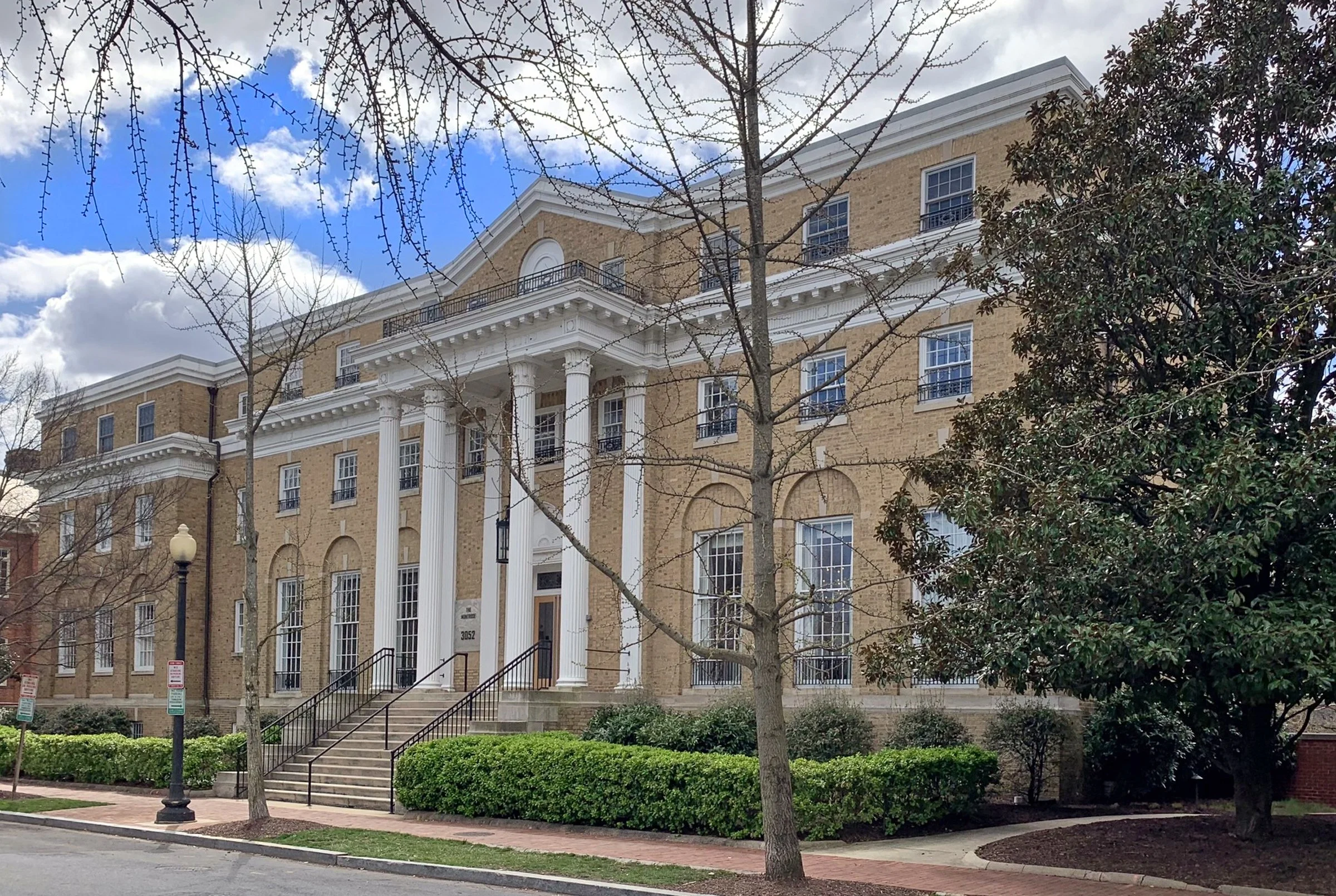
The Montrose, Georgetown, Washington, DC
Developer: Argos Group
Architect: Sorg Associates
Civil Engineer: Christopher Consultants, Ltd.
Landscape Architect: Bell Design, Inc.
General Contractor: Eichberg Construction
Originally completed in 1913 as the Home for the Aged and Infirm Blind, this one‑acre Georgetown property was conceived as both a residence and a sanctuary and an early example of socially minded institutional architecture in Washington, DC. Designed in the Beaux‑Arts tradition, the building featured formal symmetry, generous windows, and a dignified presence along its quiet residential street. Over the decades, as the institution’s needs changed and the property passed through various owners, the grounds deteriorated and the once‑gracious landscape fell into neglect.

When redevelopment began, the site required not only restoration but reinterpretation. Bell Design undertook extensive archival research into the building’s origins, its early landscape configuration, and the plant species historically associated with institutional gardens of the period. This research informed a preservation‑minded approach that honored the site’s legacy while preparing it for contemporary residential life.
Several historic canopy trees, some dating back to the building’s earliest years, were carefully evaluated and preserved as defining features of the new masterplan. Their presence anchors the landscape in its past and provides an immediate sense of maturity and permanence.

Preserved Heritage Osage Orange tree

As the property was transformed into fifteen luxury condominium residences with new underground parking, Bell Design collaborated closely with the project team including the developer, architect, civil engineer, and general contractor—to integrate landscape, circulation, and stormwater systems seamlessly into the reimagined site. Coordination with arborists, preservation consultants, and accessibility specialists ensured that the design met both regulatory requirements and the aesthetic expectations of a high‑end residential community.
The resulting landscape is a traditional park‑like setting in the Beaux‑Arts style, designed to complement the building’s classical architecture. A central lawn and structured planting beds establish a formal framework, while a fieldstone outdoor kitchen and seating terrace provide a welcoming space for social gatherings. ADA‑accessible pathways weave through the grounds, connecting residents to shared amenities and creating a gracious, walkable environment.

Sustainability is integrated discreetly but effectively. A bio‑retention basin planted with native shrubs and perennials manages stormwater on site, improving ecological performance without compromising the historic character of the garden.
The completed project restores the dignity of the 1913 institution while offering residents a serene, beautifully crafted landscape—one that bridges past and present through thoughtful preservation, collaboration, and design.