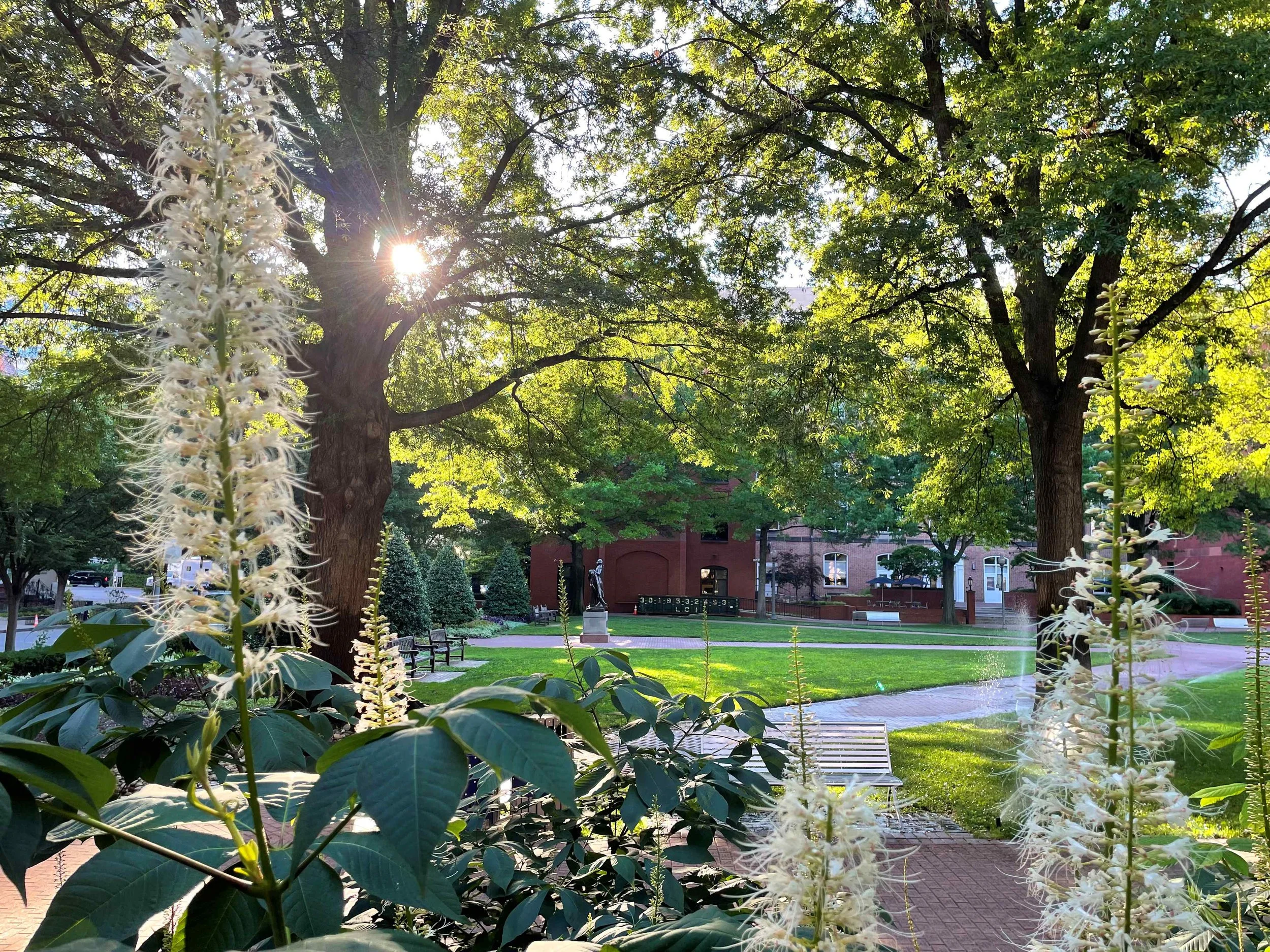
Where the City Meets the Quad: Pollinator Gardens for a Historic GW Campus
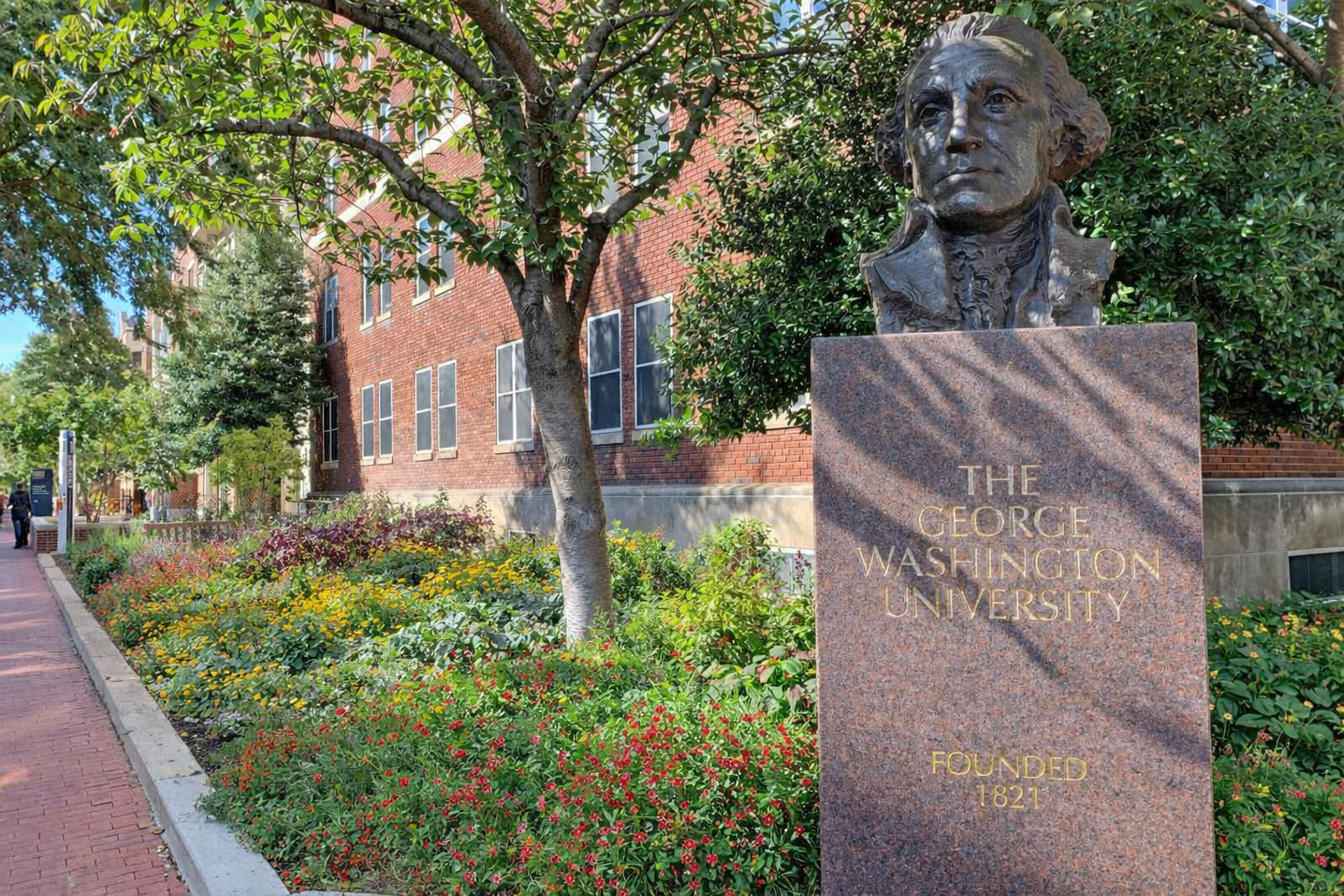
George Washington University, Foggy Bottom, Washington, DC
Our planting designs for the school’s urban streetscapes and protected quadrangles emphasize a long season of interest, with a particular focus on spring and fall bloom. To support campus ecology and reduce maintenance demands, we specified a palette of native and adapted species, prioritizing plants that provide nectar, pollen, and habitat for pollinators throughout the academic year.

Within George Washington University’s Foggy Bottom campus, we created landscape designs for a series of distinct spaces—Francis Scott Key Hall, Baussell Walk, Corcoran Hall, University Yard, and Jacqueline Bouvier Kennedy Onassis Hall—each with its own rhythm and architectural character. These gardens and corridors form a living network of green that softens the university’s urban core, linking historic brick façades and modern glass structures through texture, color, and seasonal change.
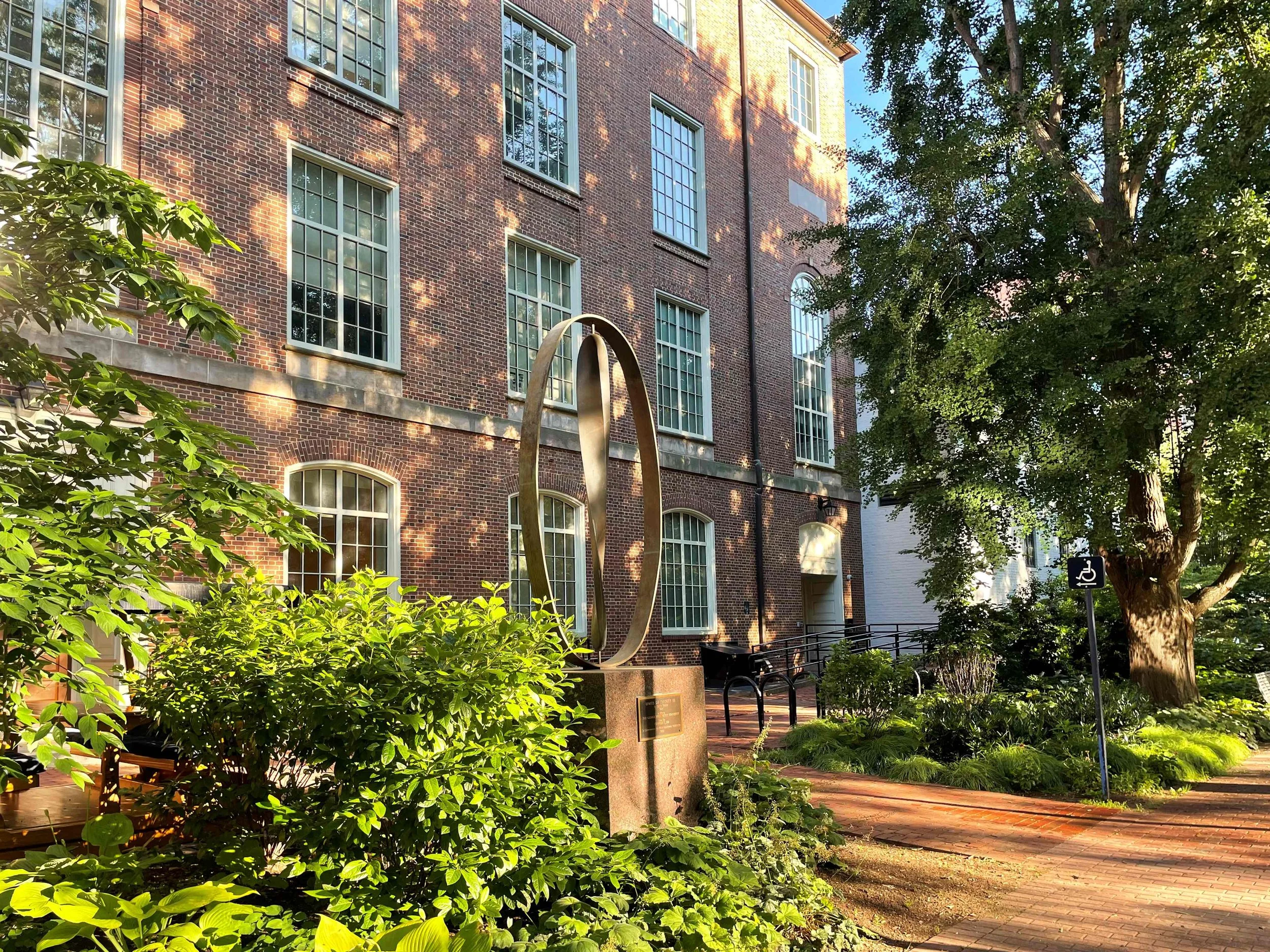
Founded in 1821, GW remains deeply intertwined with the civic and cultural life of Washington, DC. Its campus, nestled among 19th‑century rowhouses, early institutional buildings, and contemporary academic architecture, embodies the city’s evolution. The plantings—Rudbeckia deamii, Clethra ‘Hummingbird’, Kalimeris ‘Blue Star’, Perovskia ‘Little Spire’, Calamagrostis ‘Karl Foerster’, Anemone ‘Robustissima’, Nepeta ‘Six Hills Giant’, Muhlenbergia capillaris, Vernonia ‘Iron Butterfly’, and Monarda punctata—create a textural, pollinator‑friendly framework that brings color, movement, and ecological function to these highly visible campus spaces.
Together, they reinforce George Washington University’s identity as an urban institution rooted in history yet committed to a sustainable future, where every courtyard and walkway contributes to the living fabric of Foggy Bottom.