
Capital Area Food Bank — Campus Renewal and Sustainable Design
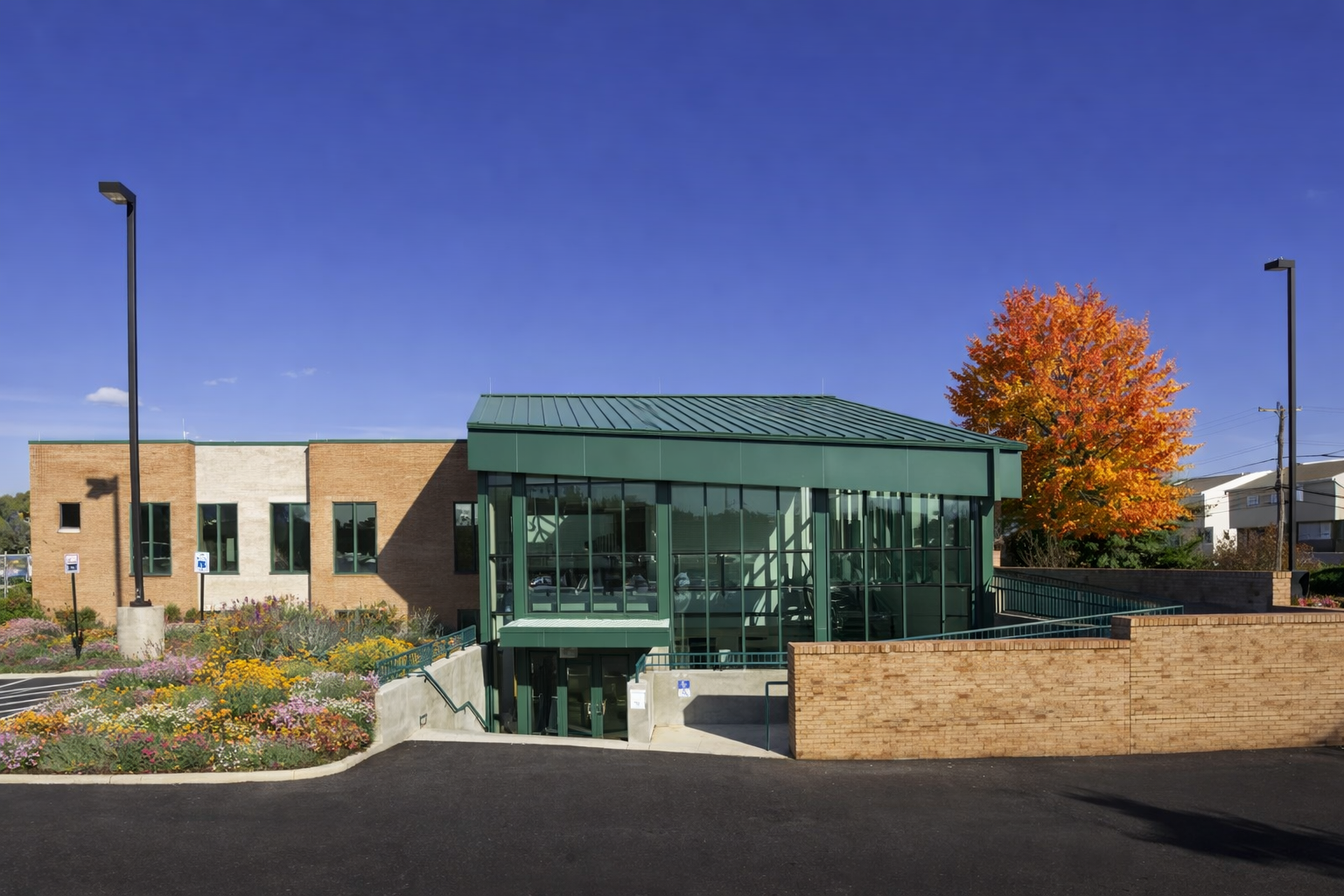
Photo © Jair Lynch
Michigan Park, Washington, DC
Developer: CAFB
Architect: Jair Lynch
Landscape Architect: Bell Design, Inc.
Landscape Contractor: Hometown Landscape
Consultant: Casey Trees
Bell Design, Inc. helped the Capital Area Food Bank reimagine its 15‑acre campus in northeast Washington, DC. As the region’s largest hunger‑relief organization, CAFB provides 30 million meals to half a million residents each year while operating a robust suite of education programs focused on nutrition, cooking skills, and fresh‑food access. The campus renewal is being approached in phases, with Phase 1 centered on revitalizing the demonstration garden and Urban Food Studio—a hands‑on learning environment where visitors of all ages learn to grow and cook fresh garden produce in an outdoor kitchen.
The new facility is designed to achieve LEED® Silver certification, integrating a suite of high‑performance, environmentally responsible systems that reduce operating costs and long‑term resource consumption. A major component of the sustainability strategy is a $1 million, 122 kW solar panel array, donated through a partnership with BP Solar. This installation offsets more than 25% of the Food Bank’s annual energy use, providing immediate operational savings and long‑term resilience. Water conservation is addressed through a 10,000‑gallon rainwater harvesting system, which supplies irrigation for the planned 50,000‑square‑foot demonstration garden. This closed‑loop system reduces potable water demand, supports on‑site food production, and reinforces CAFB’s commitment to sustainable community programming.
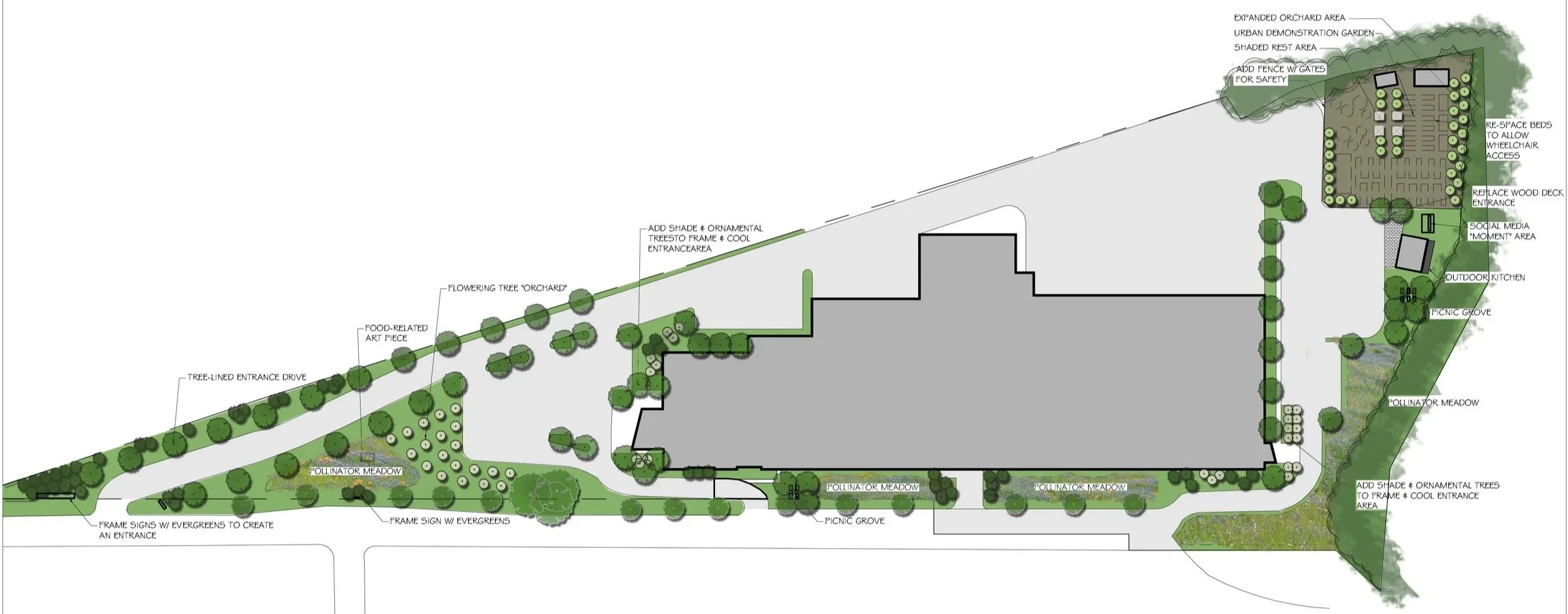
Phase 1 improvements include:
Universally accessible garden pathways that welcome visitors of all ages and abilities
New water and electrical infrastructure, sized to support expanded future programming
Attractive new garden fencing that defines the space while maintaining openness
New shade and screening trees, planted in partnership with Casey Trees
New seating areas for classes, demonstrations, and community gatherings
Upgraded outdoor kitchen appliances, generously donated by AJ Madison and Marriott
These enhancements strengthen the Urban Food Studio as a teaching landscape—functional, welcoming, and capable of supporting CAFB’s growing educational mission. Together, the campus improvements, garden enhancements, and sustainable infrastructure form a comprehensive, forward‑looking framework—one that strengthens the Food Bank’s mission, expands its educational reach, and models environmental stewardship for the region.


Photo © Shotwell Productions
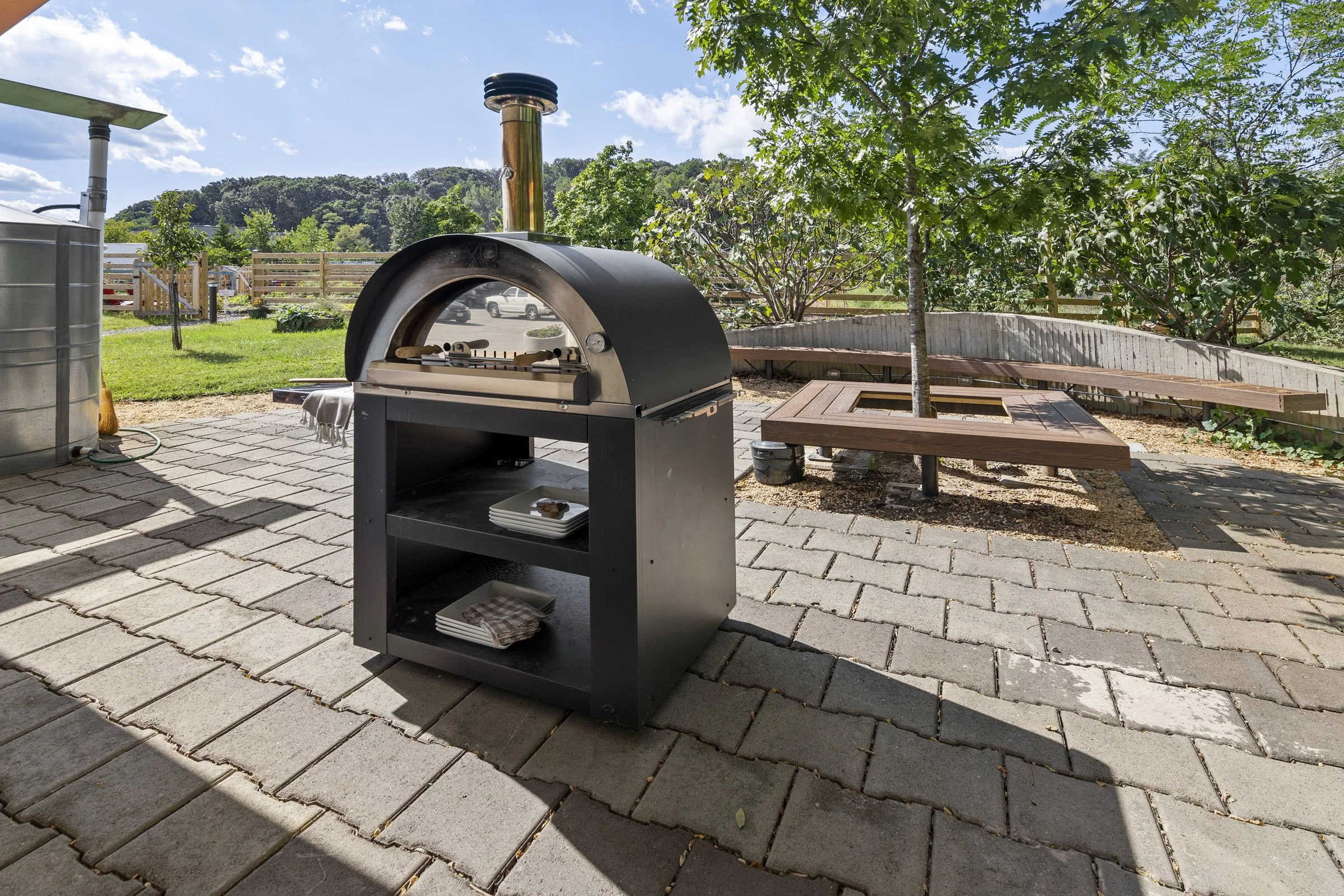
Photo © Shotwell Productions

Photo © Shotwell Productions